Conciergerie: a former Palace turned Prison in 15th century Paris

Culture Travel may earn a commission through links on this website. As an Amazon Associate, we earn from qualifying purchases.
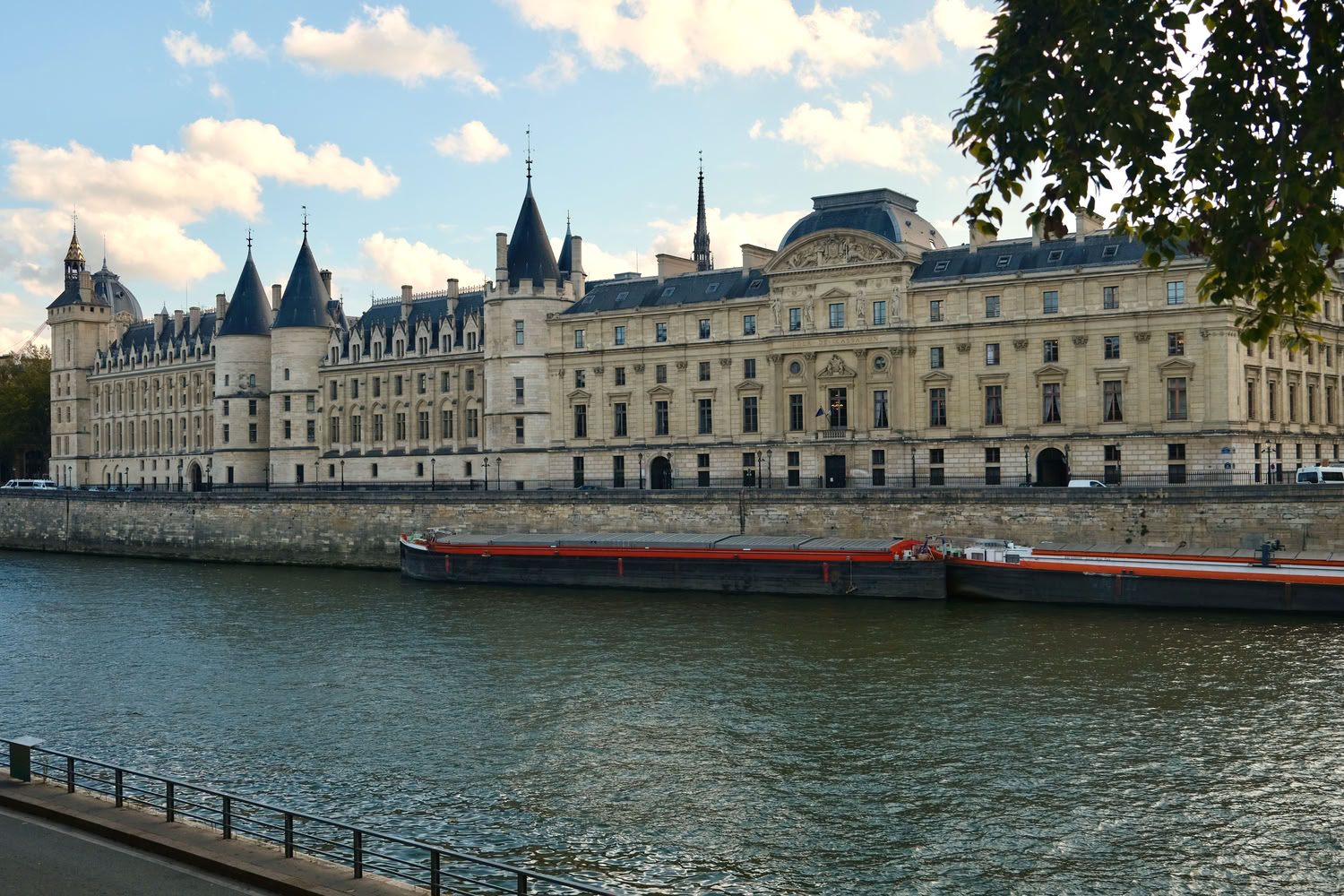
The Conciergerie in Paris is a historic building located on the Île de la Cité, which played a significant role in the evolution of French history, law, and architecture. Originally constructed in the late 14th century, it initially functioned as a royal palace under King Charles IV. By the late 15th century, it transitioned into a prison and judicial facility, which it remained for several centuries.
During the French Revolution, the Conciergerie gained notoriety as a prison for political prisoners. It housed many famous figures of the time, including Marie Antoinette, who was held there before her execution in 1793. Her cell remains one of the most visited parts of the Conciergerie today, functioning as a poignant reminder of the era’s turmoil.
Architecturally, the Conciergerie features a distinctive Gothic style, evident in its impressive hall, known as the Salle des Gens d’Armes, which is characterized by its soaring vaulted ceilings and large windows. Over the years, the building has undergone various restorations and renovations, particularly in the 19th century when it was transformed to serve as both a museum and a historical monument.
Today, the Conciergerie is part of the Paris judicial complex and also serves as a museum, attracting numerous visitors who are drawn to its rich history and poignant past. It provides insight into the lives of those who were imprisoned during the Revolution and stands as a symbol of the shifting tides of power and justice in France.
La Conciergerie
2 Boulevard du Palais, 75001 Paris, France